The Math That Killed Napoleon's Army (It Was Never the Winter)
September 1, 2026·9 min read
Everyone knows what destroyed Napoleon's Grande Armée. The snow did. The frost did. General Winter, Russia's oldest and most loyal soldier, swallowed 600,000 men whole. Charles Minard drew the famous map with its dwindling beige ribbon and its plunging temperature line, Tchaikovsky wrote the cannons into an overture, and two centuries of schoolbooks repeated the verdict: Napoleon was unbeatable until the thermometer beat him.
The story is elegant, dramatic, and wrong. By the time the first serious snow fell in early November 1812, roughly five out of every six men who had marched into Russia were already gone. Dead, captured, deserted, or rotting in fever hospitals along a 900-kilometer road. The winter did not kill the Grande Armée. It froze a corpse.
What actually killed the army was a set of numbers Napoleon had seen before he ever crossed the border. He did the math, gambled that the campaign would end before the math caught up with him, and lost.
The Alibi Napoleon Wrote Himself
The winter myth has a specific author, and it is Napoleon himself. On December 3, 1812, dictating from the retreat at Molodechno, he issued the 29th Bulletin of the Grande Armée, his first public admission that something had gone wrong. The Bulletin blamed the cold, almost exclusively. Until November 6, it insisted, the army had been executing its maneuvers in fine order, and then the frost came and killed the horses, and everything after was the weather's fault. The document closed with one of the most notorious sentences Napoleon ever put his name to: "His Majesty's health has never been better."
Europe took the excuse and ran with it, because everyone had a use for it. Napoleon needed his genius intact. His enemies preferred crediting God and the climate over crediting Russian strategy. Later, Minard's 1869 map, a masterpiece of data design, welded the temperature line to the shrinking army in every viewer's mind, even though the map's own ribbon shows the army losing most of its width in the summer months, long before the temperature line matters. The myth survived because it flattered everyone. The ledger tells a different story, and the ledger starts with three numbers.
The First Number: 615,000 Men in Midsummer
The first number is 615,000. That is the figure the World History Encyclopedia gives for the men Napoleon pushed across the Niemen River beginning on June 24, 1812, and even cautious historians who trim it concede at least 450,000 in the first wave. It was the largest invasion force Europe had ever assembled, drawn from France, Poland, the German states, Italy, Switzerland, Spain, and beyond. With it came roughly 200,000 horses, 1,372 guns, and 7,848 supply vehicles. Midsummer. Dust, not snow. Men collapsed from heat stroke in the first week.
Napoleon knew perfectly well that an army this size could not live off Lithuanian farmland the way his lean armies had lived off Lombardy in 1796. So he built the greatest supply operation of his career: magazines stacked in Danzig and Königsberg, transport battalions organized into companies of forty wagons each, herds of cattle driven behind the columns. On paper it was magnificent. On the road it ran into the second number.
The Second Number: 1,800 Tonnes of Fodder a Day
A horse doing hard work eats around nine kilograms of forage a day. Multiply by 200,000 horses and the army needed roughly 1,800 tonnes of horse feed every single day, before a single soldier ate a biscuit. A standard supply caisson carried 750 kilograms. Feeding the horses alone would have required well over two thousand wagonloads arriving daily, and those wagons were themselves pulled by horses, who also ate nine kilograms a day.
Key Fact
This is the loop that strangled the campaign. Every wagon added to carry fodder created new mouths that ate fodder. French staff calculations of the era, like those of the engineer general Dufour, put the practical reach of a wagon-supplied army at thirty or forty leagues from its magazines, about 130 to 170 kilometers. Moscow lay more than 900 kilometers from the Niemen.
The Russians understood this arithmetic better than anyone, because armies had been starving in their country for a century. The same class of failure, a consumption rate that outruns a production rate, is breaking Western air defence in 2026. Barclay de Tolly's forces refused the decisive battle Napoleon needed, retreating east week after week, burning stores as they went, pulling the Grande Armée off the end of its own supply chain like a fish being walked off a reel. The horses began dying immediately. Starved of oats, they gorged on green rye and wet grass, colicked, and dropped in their harnesses.
1,000
horses died on average every single day across the 175 days of the campaign — June as much as December
Each dead draft horse meant a wagon abandoned. Each abandoned wagon meant less food reaching the front. Each dead cavalry mount meant the army grew blinder, until by autumn Napoleon's once superb cavalry could barely screen his flanks or scout the roads ahead.
The supply system failed in summer heat, not winter snow
The Third Number: The Lice Got There Before the Frost
Then came the third number, the quietest and the worst. The men drank from puddles and ditches because the wells could not serve half a million people. Dysentery tore through the columns within days of the crossing. Typhus, carried by the lice that colonized every unwashed uniform, did worse. By late July, barely a month in, more than 80,000 soldiers were dead or too sick to fight. Counting deserters, the Grande Armée had lost around 100,000 men before fighting a single major battle. No frost. No Cossack winter. July.
Borodino: The Bloodiest Afterthought
The battles, when they finally came, were almost an afterthought to this slow bleed. Smolensk, August 16 to 18, cost some 10,000 French and 12,000 Russian casualties and won Napoleon a burning, empty city. Borodino, on September 7, was the bloodiest single day of the Napoleonic Wars, around 70,000 men killed or wounded on both sides in the space of daylight, fought in mild early-autumn weather. A week later Napoleon rode into Moscow at the head of roughly 100,000 effectives. Six hundred thousand had crossed the river. Five out of six were gone, and the first snowflake of the retreat had not yet fallen.
Moscow itself burned within a day of his arrival, torched in large part by its own departing governor, and Napoleon sat in the blackened city for five weeks waiting for Tsar Alexander to negotiate. Alexander never answered. He did not need to. His real general was not Kutuzov, and it was not the winter either. It was the supply table, and it said the French army must starve whether it advanced, stayed, or retreated.
The Retreat: Winter Finds a Corpse
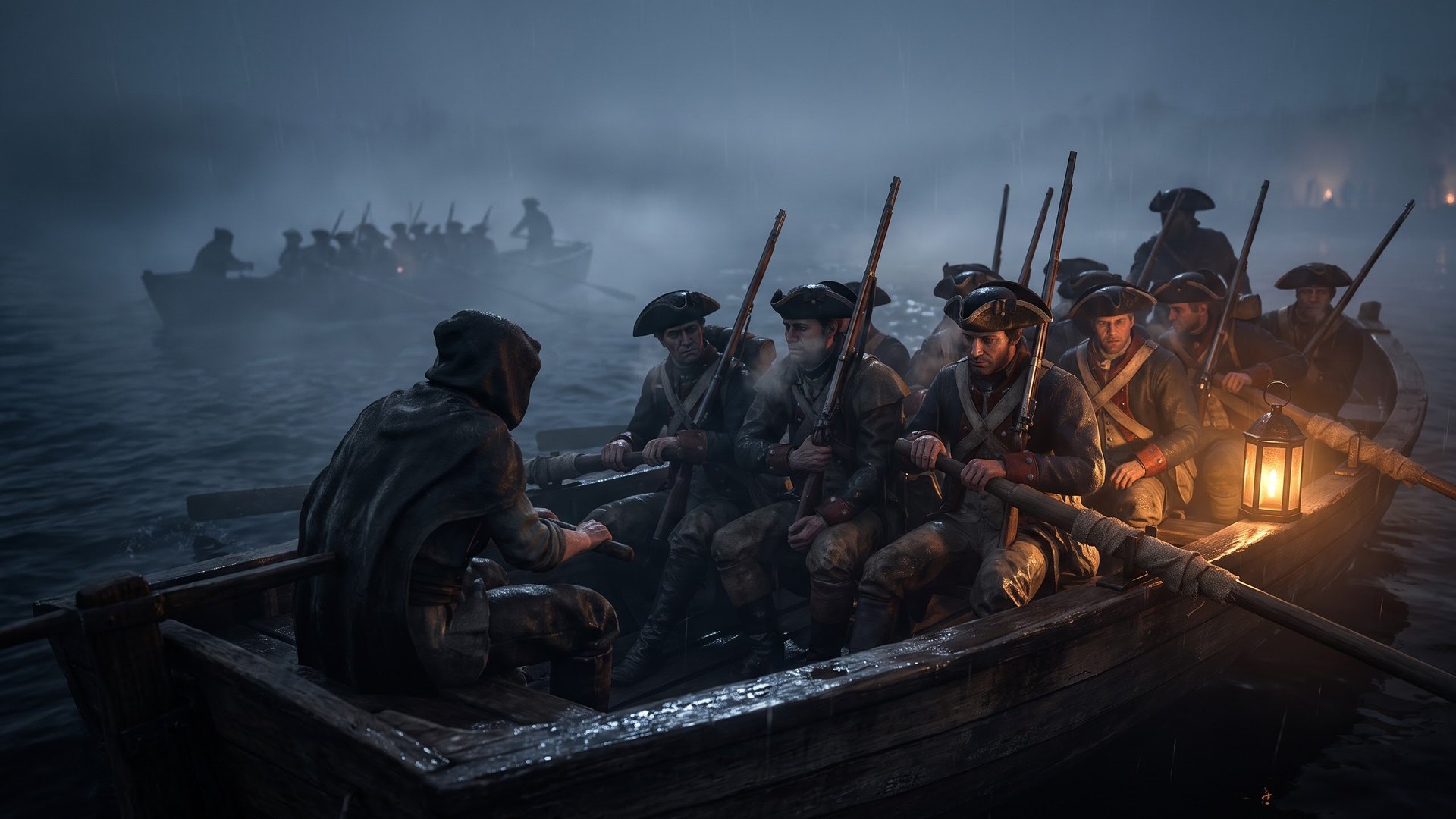
The retreat began on October 19 in decent weather. What followed was less a military operation than a funeral procession that kept being ambushed. The army was forced back onto the same Smolensk road it had stripped bare in the summer, now lined with the wreckage and shallow graves of its own advance. The men were starving before it got cold. When the hard frost finally arrived in November, with temperatures sliding toward minus 30 by the retreat's final weeks, it fell on soldiers who had already been marching hungry for a month, on horses already dying at the same daily rate they had died in July.
At the Berezina River, from November 26 to 29, Dutch pontoneers stood chest-deep in ice-choked water to build the bridges that saved what was left, one of the few unarguably heroic feats of the whole catastrophe. Thousands of stragglers and wounded were left on the wrong bank.
By the time winter came, five of every six men were already gone
Fewer than 100,000 of the original force ever came back across the border. The accounting behind that figure is obscene: roughly 380,000 dead, somewhere between 100,000 and 120,000 taken prisoner, around 100,000 deserted or vanished. And walking beside those human numbers, almost never mentioned, is the animal one. Something like 175,000 horses died in Russia, a slaughter so complete that French cavalry never truly recovered. At Lützen and Bautzen the following spring, Napoleon won battles he could not exploit because he no longer had the mounted arm to pursue a beaten enemy. The horses he lost in Russia were still losing him battles in Germany in 1813.
The Honest Sequence
So the honest sequence runs like this. The fodder math broke the transport in June and July. The water and the lice broke the men in July and August. Borodino broke what was left of the army's fighting core in September. The winter arrived in November to find the outcome already decided, and then Napoleon, in the 29th Bulletin, hired the weather as his alibi.
It matters that we keep getting this wrong, and not just for the sake of tidy bookkeeping. Blaming the winter turns 1812 into a story about luck, a great commander undone by an act of God, and luck teaches nothing. The real story is harder and far more useful. The most gifted general of his age looked at a supply calculation that did not work, trusted that speed and genius would outrun it, and marched 615,000 men into the gap between what he wanted and what the wagons could carry.
Armies are not destroyed by thermometers. They are destroyed by commanders who stop doing arithmetic.
The arithmetic of 1812 was already fatal in the heat of June, on dry roads, under a summer sky, with Moscow nine hundred kilometers and two thousand wagonloads a day away.
Share this article
Frequently Asked
Did the Russian winter really destroy Napoleon's army?
No. By the time serious snow fell in early November 1812, roughly five of every six men who crossed the Niemen were already dead, captured or gone. The winter froze an army that had already been destroyed.
What actually killed Napoleon's Grande Armee in 1812?
Supply arithmetic first, then disease. Some 200,000 horses needed around 1,800 tonnes of fodder a day, which no wagon train could deliver 900 kilometers from its magazines. Typhus and dysentery then killed or disabled more than 80,000 men by late July.
How many men did Napoleon lose in Russia?
Of roughly 615,000 who crossed into Russia, fewer than 100,000 came back. Around 380,000 died, between 100,000 and 120,000 were taken prisoner, and about 100,000 deserted or vanished. Roughly 175,000 horses died with them.
Why did Napoleon blame the winter for the defeat?
The 29th Bulletin of the Grande Armee, dictated on December 3, 1812, blamed the cold almost exclusively and claimed the army had been in fine order until November 6. It was an alibi, and Europe accepted it because the excuse suited everyone involved.
Was Borodino the turning point of the 1812 campaign?
Not really. Borodino on September 7 was the bloodiest single day of the Napoleonic Wars, but the campaign was already lost to logistics. Napoleon entered Moscow a week later with about 100,000 of the 600,000 men who had crossed the river.