The First Tank Attack Wasn't a Failure. Nobody Expected It to Win.
September 3, 2026·11 min read
Everyone who tells the story of 15 September 1916 reaches for the same number. Forty-nine tanks were meant to go forward at Flers-Courcelette. Most of them never got where they were going. They threw tracks, sank into shell holes, seized up on the approach march, or simply stopped. By the time the infantry went over the top, the British Army's secret weapon had mostly disqualified itself.
It is a satisfying story. It confirms what people already believe about the Somme: that the men at the top were careless with lives and careless with tools, that a war-winning invention was squandered because a field marshal could not wait. Winston Churchill thought so. So did Ernest Swinton, who had helped design the thing. Both of them said so in print, and both of them were right about one particular thing and wrong about almost everything else.
Because the number proves nothing. The men who wrote the operations orders for 15 September had already assumed the tanks would break down. They put it in writing. They told the infantry, in advance and in plain language, not to wait.
What the Legend Says
vs
What the Orders Say
The Objection Was About Surprise, Not Performance
Churchill's objection came first and came early. In a memorandum dated 7 January 1916, while the machines were still a secret being built under the cover story of water carriers for Mesopotamia, he warned that none should be used until all could be used at once. Swinton, a lieutenant-colonel and one of the earliest advocates for the whole concept, had made the same argument in June 1915. There should be no preliminary efforts with a few machines, he wrote. Show the enemy one, and you have shown him everything.
Their logic was sound and their conclusion was about surprise, not about combat performance. Surprise is a resource you spend once. Fifty tanks on a narrow front in September could not do what five hundred tanks on a broad front might do the following spring, and once the Germans had seen the machines they would start building the guns and the ammunition to kill them.
Key Fact
Which they did, and quickly. Armour-piercing rounds fired from Mauser rifles would stop a Mark I. German gunners at Flers worked that out inside a day. The secret was worth exactly one morning, and that is the honest cost of 15 September 1916.
How a Surprise Argument Became a Performance Verdict
J.F.C. Fuller, writing after the war in Tanks in the Great War, turned the surprise argument into a performance verdict, and the performance verdict stuck. The Canadian official history was blunter still, concluding that the armour in its first action failed to carry out the tasks assigned to it.
That sentence is the origin of the modern myth, and the trouble with it is the last four words. Nobody who reads the orders written before the battle can honestly claim the tanks failed the tasks assigned to them, because the tasks assigned to them were small.
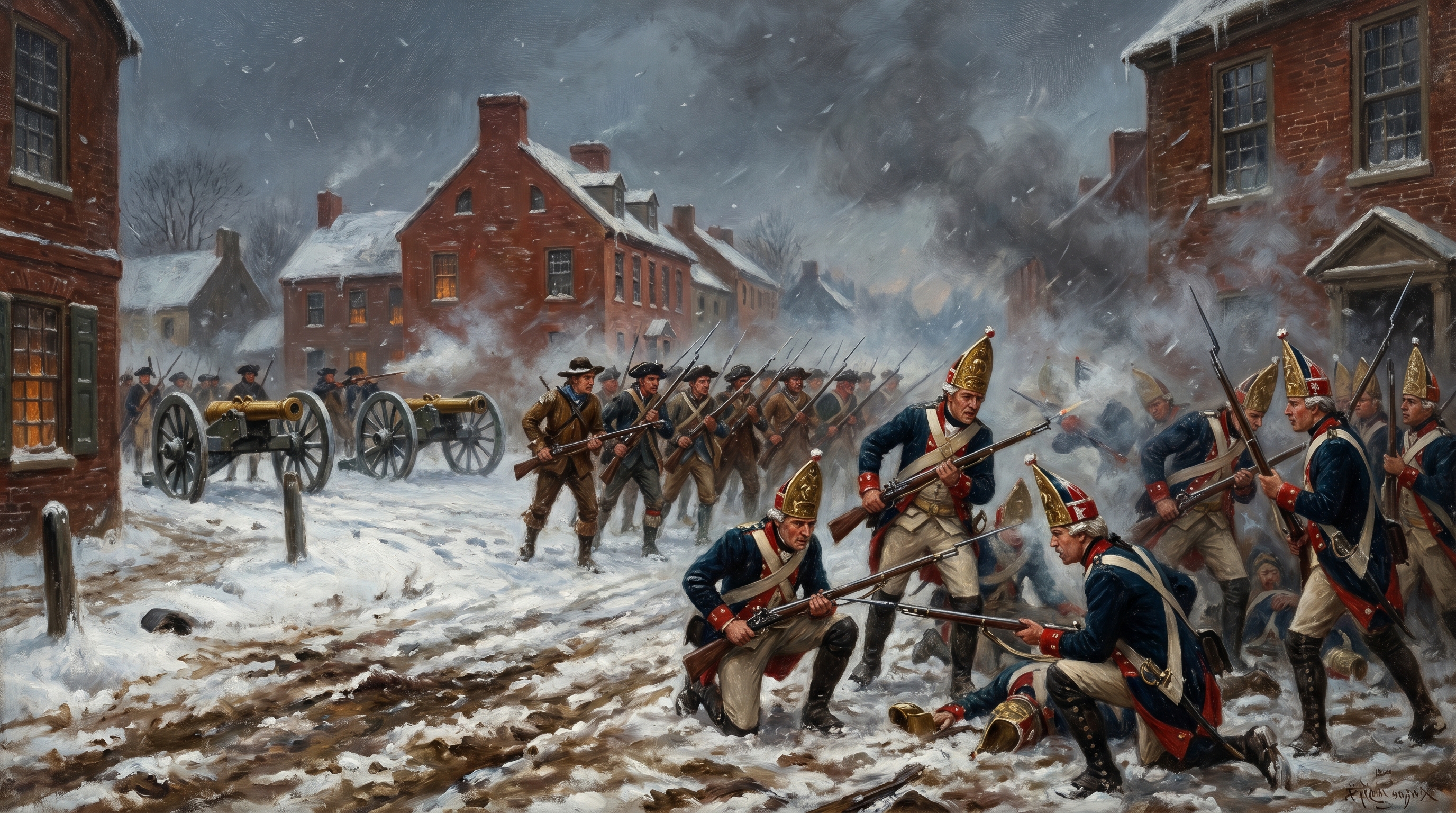
This is how most military myths are built. Not by liars, but by later writers borrowing a conclusion from an argument that was about something else, exactly the way the Hessians got written into American memory as mercenaries on the strength of a propaganda label nobody checked.
Read the Paperwork
The 12th Battalion of the East Surrey Regiment received an operations order defining the tanks' job as destroying machine guns and strongpoints and clearing the way. The same document instructed that if the tanks went out of action, the infantry were on no account to wait for them, because waiting meant losing the artillery barrage, and losing the barrage meant dying.
On the Canadian side the 27th Battalion put it even more flatly. Two tanks would probably work with them, the order noted, but plans were to be made irrespective of them.
That is not a commander expecting a breakthrough weapon. That is a commander hedging against a machine he does not trust, and hedging correctly. It is the same distinction that separates a system doing its job badly from a system nobody had actually asked to do the job, which is the whole argument over the forty-three minutes at Pearl Harbor.
The orders were written on the assumption the tanks would break down. Most did.
Forty-Nine Machines, Four Corps
Forty-nine tanks of C and D Companies, Heavy Section, Machine Gun Corps went into the operation, drawn from around 150 then in existence.
Formation
Tanks allotted
XIV Corps
17
XV Corps
17
III Corps
8
Reserve Army (Canadian Corps)
7
Zero hour was 0620. The single aggregate figures you find quoted everywhere for how many actually fought contradict each other badly, because different sources counted at different hours and different points on the road, so the honest way to measure the day is corps by corps. Do it that way and the picture sharpens considerably.
Courcelette: Four Failed, Two Fought
Start with the Canadians. Six tanks crossed with the 2nd Canadian Division, split between the 4th and 6th Infantry Brigades for a converging attack on a fortified sugar beet refinery the men called the Sugar Factory. Four of the six never made it past the Canadian front line.
C.3, Chartreuse, took shrapnel in its rear steering gear and drove into a shell hole it could not climb out of. C.4, Chablis, threw its tracks. C.1, Champagne, bogged down with its tracks spinning uselessly in the mud, and the crew eventually walked away from it. C.2, Cognac, disappeared into a crater. Troops were detached to try to free the ditched machines. The 28th Battalion's war diary recorded that the attempt was futile.
Two tanks were left. What those two did is the whole argument.
2
tanks still running in front of Courcelette out of the six that started, and the two that decided how the Canadian attack ended
Private Donald Fraser of the 31st Battalion was out in no man's land with the 6th Brigade when the attack came apart. German machine gun and rifle fire pinned the advance flat. Platoon commanders who lifted themselves above the lip of a crater to lead their men forward were shot down as they rose. Fraser wrote afterwards that the assault was a failure and that the men were at the mercy of the enemy.
Then a shape came grinding through the smoke behind them.
It was C.5, Crème de Menthe, a male Mark I carrying two naval six-pounders and four Vickers guns, commanded by Captain Arthur Inglis, an infantry officer seconded from the Gloucestershire Regiment. It opened fire on the German positions. In Fraser's account the tank gave new life and vigour to the men, who got up off the ground and followed it forward as if to be in at the kill. They took the trench. Private Joseph Thompson wrote that his comrades thought crushing the German positions was such quick work that they asked permission to push on ahead, and were given it.
Over on the 4th Brigade front, Second Lieutenant John Allan brought C.6, Cordon Rouge, astride a German trench and poured enfilade fire down its length in both directions.
The machines that reached the enemy
Unit
Commander
Strength
The 4th Brigade war diary, written by men who had watched two of their three tanks fail, recorded that the tanks proved their value.
Flers: The Tank in the High Street
The pattern repeated to the east. Four tanks were assigned to the New Zealand Division and two survived to fight. The 3rd Battalion of the New Zealand Rifle Brigade ran into uncut wire and heavy fire at Flers Trench and stopped, unable to advance, and waited.
At about 1030 two machines arrived, Lieutenant Herbert Pearsall's D.11 and Captain Graeme Nixon's D.12. D.11 covered the flank. D.12 went at the wire and the machine guns. The New Zealanders took Flers Trench and pushed on to Abbey Road Trench by 1100, an advance of roughly 2,230 metres, one of the deepest made by any division that day.
And in the village of Flers itself, Second Lieutenant Stuart Hastie's D.17, Dinnaken, worked up the main street with men of the 122nd Brigade behind it. The war diary of the 15th Hampshires, still groping for a word to describe a thing nobody had a word for, called it an armoured car, and recorded that it did most useful work smashing enemy strongpoints and gave the men great confidence. Two days later the Daily Chronicle printed an airman's wireless report of a tank walking up the high street of Flers with the British Army cheering behind. Hastie got the Military Cross.
Flers fell that morning. Earlier attempts had cost thousands of lives.
The First Tank in Action Anywhere in the World
It had gone in over an hour earlier. At 0515 Captain Harold Mortimore took D.1, Daredevil, across no man's land toward Delville Wood, ahead of the general advance. He was 23, he had volunteered for the tanks after crashing an aeroplane in training with the Royal Naval Air Service, and he had never been in a battle.
He got his machine astride a German trench and opened fire. He remembered the faces of the Germans coming up out of their dugouts for the rest of his life. Shortly afterwards Daredevil was knocked out, its steering hit. The Tank Museum records the fire as German artillery. Mortimore's daughter, Dr Tilly Mortimore, has said it was British. The crew got out. The tank stayed on the field.
What the Day Actually Cost
None of this made the day a victory in the way Haig wanted. The cavalry never got their gap. The deepest first-day objective, Gueudecourt, would not fall until 26 September. The cost was brutal in the specific, unglamorous way the Somme was always brutal.
Casualties around 15 September 1916
Casualties, not dead. The aggregate figure for the battle is routinely misquoted online as a death toll.
The 31st Battalion came out of it with 318 men answering roll call out of 722.
A Useful Accessory, and Nothing More
Lieutenant-General Sir Julian Byng, commanding the Canadian Corps, wrote the verdict that the historian Andrew McEwen would later borrow for the title of the best study of the day's fighting.
Tanks are a useful accessory to the infantry, but nothing more.
Lt-Gen Sir Julian Byng, commanding the Canadian Corps
He was right, and he was not insulting them. That was the job.
Haig came away pleased and overstated it, claiming that wherever the tanks advanced the British took their objectives, which is not quite true, since the 47th Division took High Wood without a tank anywhere near them. Within two days he was asking London for as many more as they could send. He eventually ordered a thousand. Swinton, still bitter about the lost surprise years later, nonetheless wrote that the machines had fully justified themselves.
The Verdict
What happened on 15 September 1916 was not a weapon failing. It was a weapon doing a small job, in small numbers, on ground that would have stopped anything mechanical, for men who had been told not to count on it and did not.
Judge it against the breakthrough it never promised and it looks like a fiasco. Judge it against the orders actually written, and against Donald Fraser lying in a shell hole watching a machine nobody had a name for come out of the smoke and put his platoon back on its feet, and it looks like something else entirely.
The tanks were never asked to win the Somme. They were asked to get the infantry across sixty yards of open ground. Twice that morning, in front of Courcelette, they did.
Sources: Andrew McEwen, "A useful accessory to the infantry, but nothing more": Tanks at the Battle of Flers-Courcelette, September 1916, "Canadian Military History" 20:4 (2011), drawing on Canadian, British and New Zealand battalion war diaries held at Library and Archives Canada and the UK National Archives; Trevor Pidgeon, "The Tanks at Flers" (1995); Christy Campbell, "Band of Brigands" (2007); Wilfrid Miles, "Military Operations France and Belgium 1916" (1938); The Tank Museum, Bovington.
Share this article
Frequently Asked
Did the first tank attack fail at Flers-Courcelette?
Not against the tasks it was given. The operations orders written before 15 September 1916 defined the tanks' job as destroying machine guns and strongpoints, and explicitly told the infantry not to wait if the machines broke down. Judged against the breakthrough they never promised, the day looks like a fiasco. Judged against the orders actually written, most tanks that reached the enemy did the job.
How many tanks were used on 15 September 1916?
Forty-nine tanks of C and D Companies, Heavy Section, Machine Gun Corps went into the operation, drawn from around 150 then in existence. Seventeen went to XIV Corps, eight to III Corps, seventeen to XV Corps and seven to the Reserve Army for the Canadian attack on Courcelette. Zero hour was 0620.
Why did Churchill and Swinton object to using tanks at the Somme?
Both argued for surprise, not performance. Churchill's memorandum of 7 January 1916 warned that none should be used until all could be used at once. Ernest Swinton had made the same case in June 1915. Show the enemy one machine and you have shown him everything, and the Germans began fielding armour-piercing rifle ammunition almost immediately.
What did the tanks actually achieve at Flers-Courcelette?
In front of Courcelette, C.5 Creme de Menthe and C.6 Cordon Rouge got a pinned Canadian attack moving again and took the Sugar Factory position. On the New Zealand front, D.11 and D.12 broke the deadlock at Flers Trench and enabled an advance of roughly 2,230 metres. In Flers village itself, D.17 Dinnaken led infantry of the 122nd Brigade up the main street.
Which was the first tank to go into action anywhere in the world?
D.1 Daredevil, commanded by Captain Harold Mortimore, which crossed no man's land toward Delville Wood at 0515 on 15 September 1916, more than an hour before the general advance. It was knocked out shortly afterwards when its steering was hit.