The Viral Celtic War Horn Video Is Fake. The Real Sound Is Stranger.
In late August 2026, a video landed on Reddit showing a man standing in a field, blowing into a bronze tube taller than he is, topped with the snarling head of a wild boar. What comes out is a low, shuddering rumble. You feel it in your chest before you register it as sound. The caption said this was psychological warfare, that this was what Roman soldiers heard coming out of the treeline before the Celts hit them. It gathered close to 56,000 upvotes and over 1,400 comments.
That sound is not.
That clip has been circulating since at least December 2023, when it spread across Twitter and picked up a Community Note flagging the audio as fake and pointing readers to the unedited original. The note changed nothing. Notes do not travel with a video once it gets ripped and reposted, and two and a half years later a fresh audience met the thing as revelation. Most of them believed it. A few did not, and the sceptics in that Reddit thread got closer to the truth than any article written about the carnyx in years.
One commenter noticed the simplest thing: every other carnyx recording he could find sounded like a trumpet, not this. Another said there was reverb and delay stacked into the mix, and not a subtle amount. A third made the sharpest call in the whole thread, arguing that a tube of that size physically cannot push out that much bass at that distance. A fourth pointed out that the closest legitimate recording anyone could produce had been made inside a church, where the building did half the work.
They were all right. They were more right than they knew, because the hard acoustic data on this instrument exists, has existed since 2012, and it says something considerably more interesting than "the video is fake."
A Boar's Head Pulled Out of a Scottish Field
The data starts with a lump of corroded bronze pulled out of the ground at Leitchestown, near Deskford in Banffshire, in 1816. A farm there gave up the hammered boar's head bell of a carnyx, and nothing else. No tube, no mouthpiece, just the head, apparently buried on purpose, the way almost every surviving carnyx was buried on purpose. It sat in Scottish museum collections for the next 176 years as a beautiful, mute artifact.

In 1992 a team decided to make it speak. The musicologist John Purser pulled together archaeologist Fraser Hunter from the National Museum of Scotland, silversmith John Creed, acoustician Murray Campbell from the University of Edinburgh, and trombonist John Kenny. They had one bell and no instrument. Everything below the boar's head had to be inferred from Iron Age coins and vessels, above all from the Gundestrup cauldron, which shows three men playing carnyces held vertically. Campbell's lab ran impedance measurements on a prototype. Creed built the piece using period materials and period technique. The design was signed off in 1993, and Kenny became the first person in roughly two thousand years to play a carnyx.
Then they measured it properly, in an anechoic chamber, and published the results.
Fewer than two dozen carnyces have ever been found across Europe, and every one of them is broken. Almost all came out of sacred sites, deliberately taken apart before burial rather than lost or discarded.
What the Instrument Actually Does
The tube from mouthpiece to boar's head runs just over 1.6 metres. Kenny can reach a D sharp at 39 hertz, genuinely subsonic territory, and a D sharp at 77 hertz above it. Both are pedal notes. Neither has a resonance behind it in the instrument's impedance curve, which is the acoustician's way of saying the carnyx does not want to make those notes and does not project them when it does. The 39 hertz note is measurably the weaker of the two. That is the entire low-frequency case for the viral clip, and it collapses on contact with the measurements.
Where the carnyx is genuinely frightening is at the opposite end. Its bell cutoff frequency sits around 2,500 hertz, roughly three times that of a tenor trombone, and the instrument radiates sound with unusual efficiency around 3 kilohertz, the band the human ear is most sensitive to. It is the frequency of a scream. The boar's head is not decoration doing nothing acoustic either: the hinged jaw and the sprung wooden tongue inside it behave like a trombone mute, shaping the output. Campbell and Kenny also measured the instrument's brassiness potential at 0.69, meaning it distorts and gets harsher the harder it is played, exactly like a narrow-bore trombone pushed to fortissimo.
Put plainly, the real carnyx does not rumble. It shrieks.
Rome Wrote Down a Scream, Not a Drone
Countless horn-blowers and trumpeters were sounding at the same moment, and the whole army was shouting its war cry, so that it seemed as if all the country round had got a voice and caught up the cry.
Polybius, describing the Battle of Telamon, 225 BC
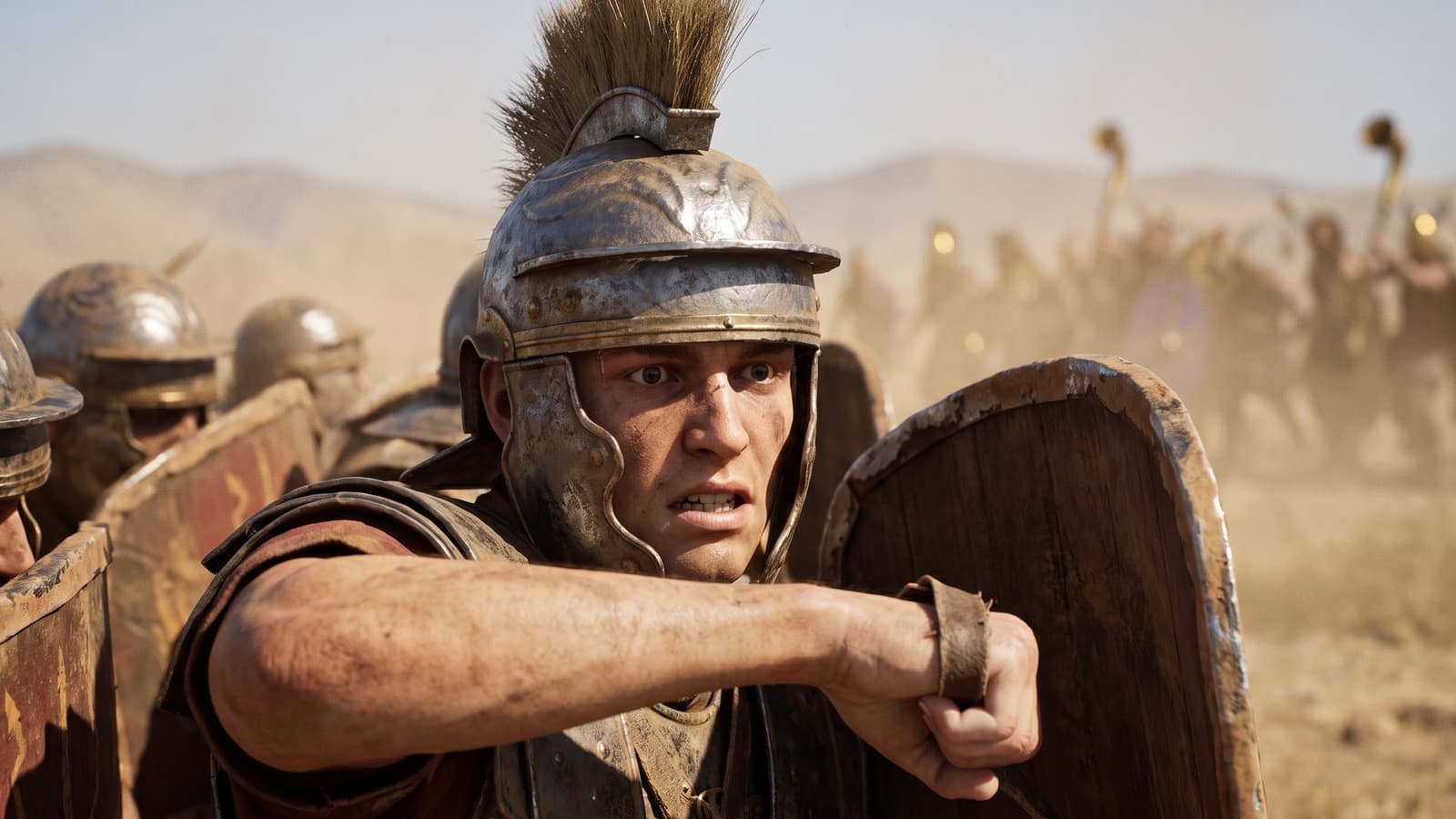
Notice what is absent from that description. There is no rumble in Polybius. There is no bass. There is volume, and pitch, and above all the horror of a sound with no locatable source, that seems to come from the landscape itself rather than from the men in front of you. That is precisely what an instrument radiating hard at 3 kilohertz, played by dozens of men at once across a wide front, would do. High frequencies scatter and reflect. They confuse direction. A wall of them from an unseen line of trees is disorienting in a way a low drone never is.
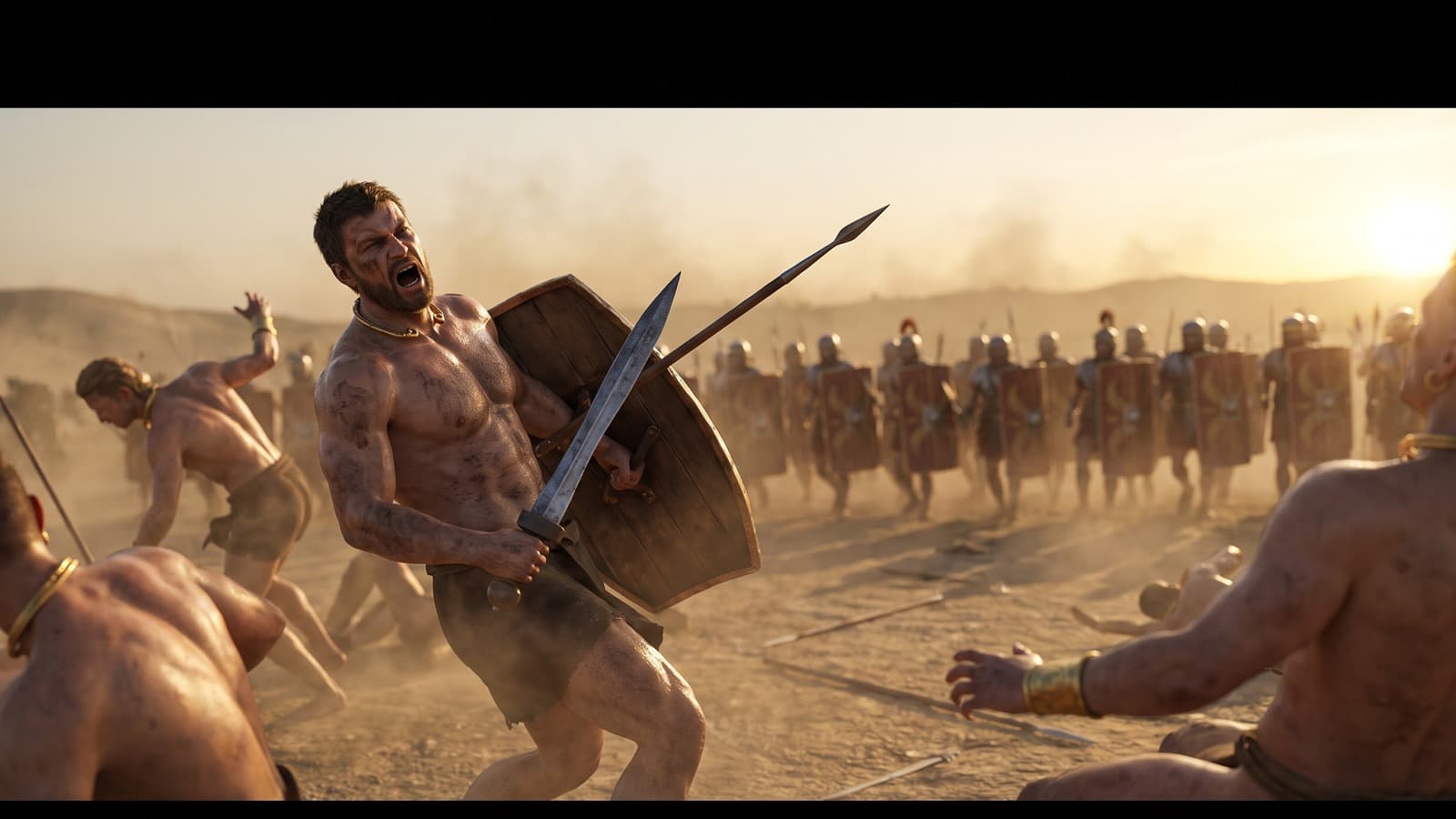
The battle went badly for the Celts, and it is worth knowing how badly, because the noise did not save them. The consul Gaius Atilius Regulus was killed in the cavalry fight for the hill, and his head was carried to the Gallic kings. Then the Roman javelin throwers went to work on the Gaesatae, who had stripped naked and stood in the front rank out of pride, their shields not covering enough of them. Polybius records around forty thousand Celts killed and ten thousand taken prisoner. Terror is a weapon with a short range, and the same lesson shows up wherever a smaller force relied on shock rather than depth, the same wall that later broke the Hessians' reputation rather than their discipline once a single defeat became the whole story told about them.
The Find That Proved the Guesswork Right
What makes the reconstruction story better than the viral clip is that nobody involved expected it to work. Kenny has said he went into the project half convinced the finished object would turn out to be a beautiful lump of bronze that sounded like an inert tube. It did not. He describes a dynamic range comparable to a modern orchestral brass instrument, from a whisper to something violent, and has spent three decades finding out what it can do, including playing it solo to sixty-five thousand people at the Stade de France in March 2003.
The find that vindicated the guesswork came a decade later. In 2004, French archaeologist Christophe Maniquet excavated a Celtic sanctuary at Tintignac in the Corrèze and pulled out around fifty pieces belonging to seven carnyces, buried in the late first century BC. Six had boar heads. One had the head of a serpent. Crucially, one of the Tintignac pieces included an integral mouthpiece, and its internal profile turned out to be almost identical to the mouthpiece the Deskford team had guessed at twelve years earlier, with essentially no throat constriction. They had reasoned their way to the right answer from coins.
Fewer than two dozen carnyces have ever been found, all of them broken, almost all from sacred sites, taken apart deliberately before burial. Fraser Hunter, who was on the 1992 team and remains at the National Museum of Scotland, has put the instrument's purpose about as well as it can be put: the sound carried for miles, rallying your own men and unnerving the other side. Sonic warfare is not a bad way to think of it.
What the Fake Actually Costs
None of the real story needed a reverb plugin. That is what makes the edit worth calling out, and it is not pedantry. It did not just exaggerate the carnyx. It inverted it. It took an instrument whose terror lived in a piercing, disorienting, human-scream frequency band and turned it into a cinema sub-bass drone, because sub-bass is what a modern audience has been trained to read as menacing.
Thirty years of reconstruction work, an acoustics paper out of Edinburgh, seven horns out of a French sanctuary and a boar's head out of a Scottish field all point at a sound the internet has now decided was something else. Rome heard a scream from every direction at once and wrote it down. The last version to go viral gave it a soundtrack instead. It is the same pattern that let thin claims about ancient conquest calcify into folklore long after the primary evidence said otherwise: a good story, once it starts moving, outruns the correction chasing it.